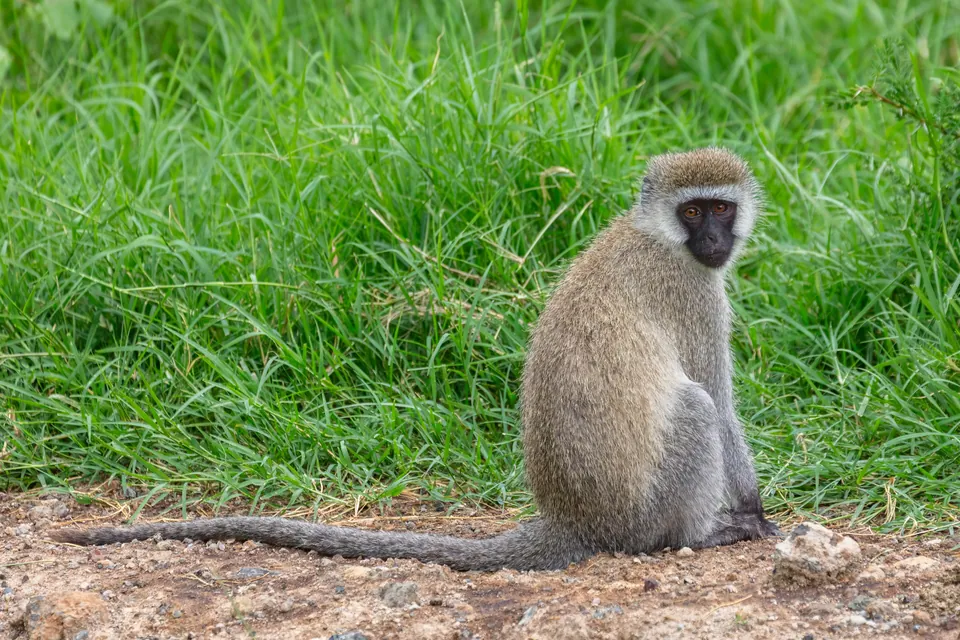
Many visitors meet their first Ugandan monkey before they leave Entebbe: a small grey vervet sitting on a wall, watching your lunch. They’re so common around lodges and lake shores that people tend to overlook them, which is a shame. Vervets are among the most studied monkeys in the world, and they’re cleverer than they look.
Name and classification
- Common names: vervet monkey, vervet. In Luganda it’s enkima, and it’s the totem of the Nkima clan of Buganda.
- Latin name: Chlorocebus pygerythrus. Scientists split the old “African green monkey” group into several species, and the vervet is the eastern and southern one.
- Family: Cercopithecidae.
- IUCN status: Least Concern.
Native origin
Vervets range across East and southern Africa, from Ethiopia and the far south of South Sudan down to South Africa. Further west, other closely related Chlorocebus monkeys take over, and parts of northern Uganda are listed as home to one of them, the tantalus monkey. In southern and central Uganda vervets are everywhere: around Lake Victoria, in Lake Mburo, Queen Elizabeth and Murchison Falls, and in towns and farmland.
Physical appearance
A vervet is small and slim, with grizzled grey to olive fur and pale underparts. The face is black, framed by a band of white hair across the brow and cheeks. Males average about 5.5 kg and females about 4 kg. Adult males are easy to spot by their bright turquoise-blue scrotum and red patch underneath, which they show off to rivals. The Uganda race tends to have a reddish tinge on the back towards the tail. The long tail is grey with a darker tip, and the hands and feet are dark.
Habitat and diet
Vervets like savanna with trees, riverine woodland, lake shores and forest edges, and they do well in farmland, gardens and towns. They need trees for sleeping and safety, and water nearby. They eat mostly plants: wild fruit, flowers, leaves, seeds and pods. They add grasshoppers, termites and, now and then, eggs and chicks from bird nests. In farming areas they raid beans, maize, fruit and vegetables, so many farmers see them as pests.
Behaviour and special abilities
- Different alarms for different enemies: field studies in Kenya’s Amboseli showed that vervets give separate alarm calls for leopards, eagles and snakes. Others respond to each in the right way, running up a tree, looking up, or standing to scan the grass. Their predators include leopards, martial eagles, pythons and baboons.
- Troops: anything from about 10 to 70 animals. Females stay in their birth troop, and males move to a neighbouring troop when they mature.
- Pecking order: rank matters, and youngsters take on their mother’s rank.
- Baby-mad: newborns have pink faces and dark fur, and the whole troop takes an interest. Young females are keen to hold and carry other mothers’ infants, good practice for later.
- Mountain range: they’ve been recorded from sea level up to about 4,000 m.
- Quick learners: around lodges they learn fast that bags and plates mean food. Keep doors closed, and don’t feed them. Monkeys that get used to handouts become bold and can bite, and that often ends badly for the monkey.
Where to see vervet monkeys in Uganda
- Entebbe Botanical Gardens and the Uganda Wildlife Conservation Education Centre.
- Lake Mburo National Park; see our Lake Mburo guide.
- Queen Elizabeth, especially on the Kazinga Channel banks, and Murchison Falls.
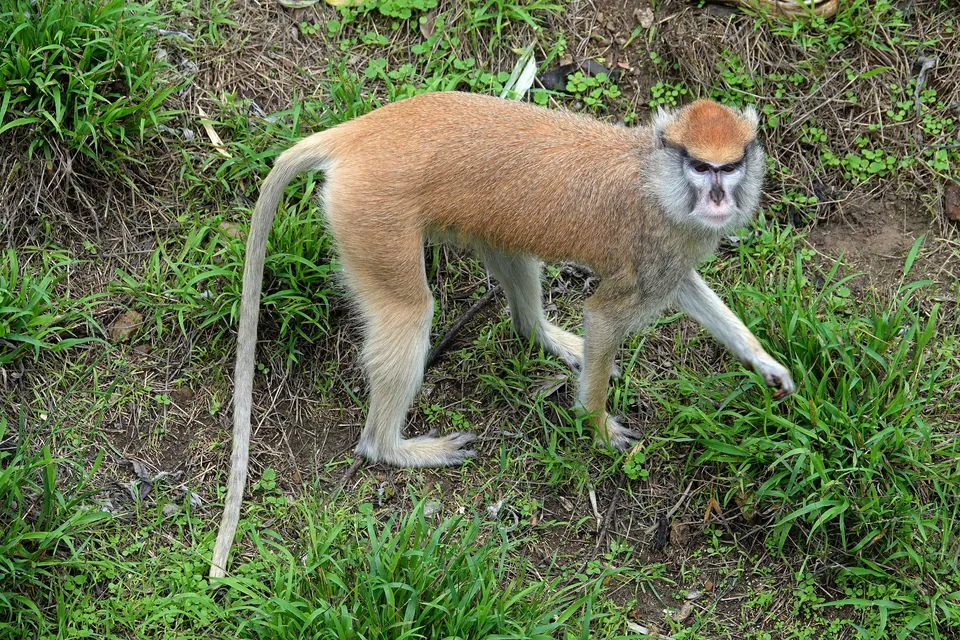
On a game drive you’ll often see them near olive baboons, and in the north look out for the long-legged patas monkey. More in primates of Uganda and our safari animals guide.
Found this useful? Send it to someone planning a trip.