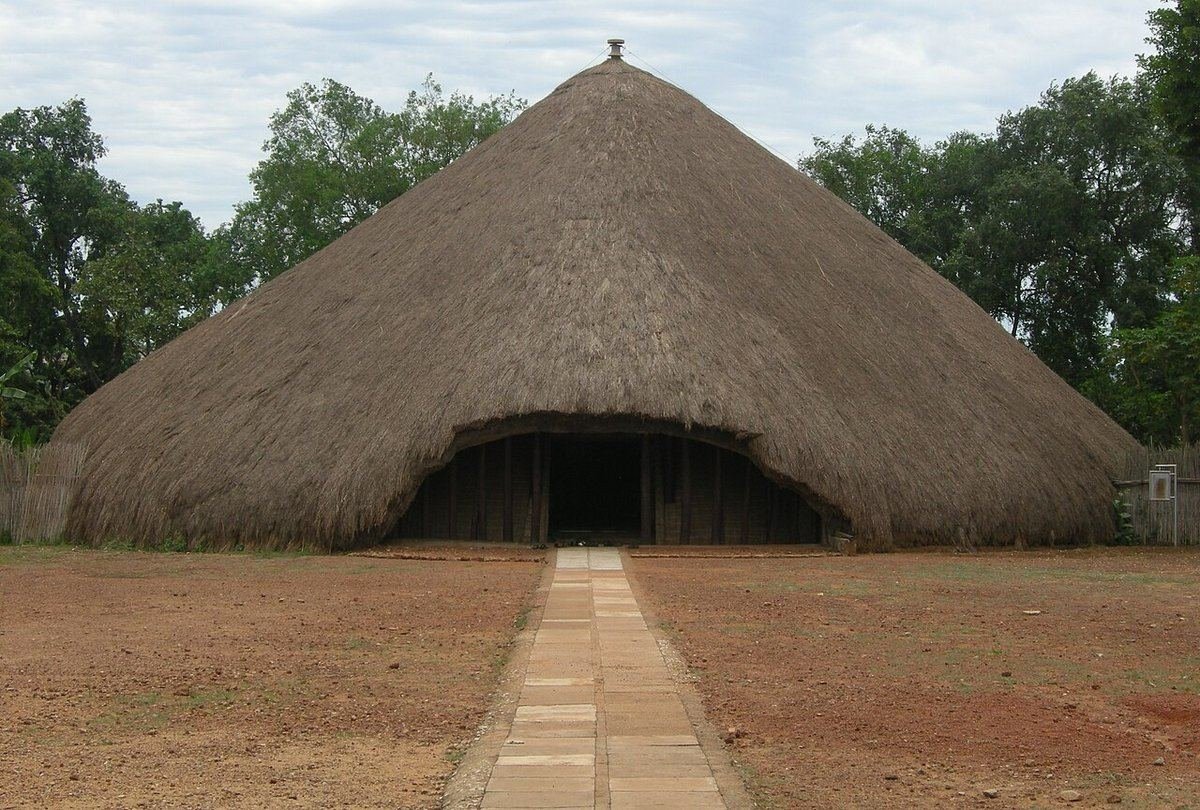
On a hill in north-west Kampala stands one of the most remarkable buildings in Africa: a vast, dome-shaped house of thatch, reed and wooden poles that shelters the graves of four kings. The Tombs of Buganda Kings at Kasubi are a UNESCO World Heritage Site, but they are not a museum. They are a living spiritual centre of the Buganda Kingdom, and a visit here is one of the best ways to understand the culture of the Baganda, Uganda’s largest ethnic group.
A royal palace that became a royal cemetery
Kasubi began as a palace. Kabaka (king) Muteesa I built his residence on the hill in 1882, and when he died in 1884 he was buried inside it, in keeping with tradition. Over the following century three more kabakas were laid to rest beside him, which is unusual: in earlier times each king had his own separate burial site. The four kings buried at Kasubi are:
- Muteesa I, who welcomed the first European explorers and missionaries to Buganda.
- Mwanga II, his son, who resisted British control and died in exile in the Seychelles in 1903.
- Daudi Chwa II, who reigned under the British protectorate until 1939.
- Sir Edward Muteesa II, the last kabaka before the kingdoms were abolished in 1967, and Uganda’s first president after independence. He died in London in 1969.
The site covers nearly 30 hectares of hillside, much of it still farmed in the traditional way. UNESCO inscribed it on the World Heritage List in 2001, recognising the main tomb house as a masterpiece of Ganda architecture and the site as a whole as a place where beliefs, spirituality and identity are kept alive.
The 2010 fire and the long rebuild
On the evening of 16 March 2010, fire destroyed the main tomb house, the Muzibu Azaala Mpanga. For the Baganda it was a national tragedy, and the site was placed on UNESCO’s List of World Heritage in Danger the same year.
What followed was a slow, careful reconstruction led by the Buganda Kingdom with Ugandan and international heritage specialists. Traditional builders from the clans responsible for thatching and construction rebuilt the great house using the original techniques and materials. The guardians’ gatehouse, the Bujjabukula, was restored too, and a modern fire-fighting system was installed, with local volunteers trained to use it. In September 2023 the World Heritage Committee removed Kasubi from the danger list, a milestone widely celebrated in Uganda.
What you see on a visit
- The Bujjabukula gatehouse, where your visit begins and where the guardians of the site keep watch.
- The drum house (Ndoga-Obukaba), home to the royal drums.
- The courtyard, ringed by houses belonging to the widows and relatives who care for the tombs.
- The Muzibu Azaala Mpanga itself. Its thatch rests on rings of palm fronds, and inside, bark-cloth curtains screen off the “forest” where the kings actually lie. Only certain people may pass beyond them.
A guide explains the roles of the Nalinnya (a royal princess who acts as a spiritual guardian), the clans that look after different parts of the site, and the stories of each king. Allow one to two hours.
Visiting etiquette
- Dress modestly. Cover shoulders and knees. Women may be offered a wrap to wear over trousers.
- Remove your shoes before entering the tomb house.
- Ask before taking photos, and never photograph inside the tomb house unless your guide says it’s allowed. Rules can change during ceremonies.
- Speak quietly and follow your guide’s lead. People come here to pray and honour their ancestors.
- Ceremonies and royal events can close parts of the site at short notice, so we always check before we go.
Good to know
- Kasubi is only a short drive from central Kampala, but traffic can be slow. Mornings are usually calmest.
- There is an entrance fee, which supports the site. We’ll confirm current fees when we plan your day.
- It pairs perfectly with the Mengo Palace and Kabaka’s Lake, the Bulange parliament building and the Uganda Museum for a full royal Buganda day.
Kasubi is a moving place to spend a morning, and a good way to begin a trip before heading out to the parks. See our Kasubi Tombs page and our roundup of Uganda’s historical sites, then get in touch and we’ll build a Kampala heritage day into your safari.