Uganda packs an astonishing number of birds into a small country. Depending on the checklist, it has around 1,090 species (the Avibase checklist, on current Clements taxonomy, lists 1,093). That’s the result of where Uganda sits: where East African savanna, Central African rainforest and the mountains of the Albertine Rift meet.
What are Albertine Rift endemics?
The Albertine Rift is the western arm of the Great Rift Valley, running along Uganda’s borders with the DR Congo and Rwanda. Its mountain forests are home to birds found nowhere else on earth, known to birders as “ARE”s. Uganda gives you access to many of them. UWA notes 23 Albertine Rift endemics in Bwindi alone. Some of the most sought after are:
- African green broadbill (also called Grauer’s broadbill), a star bird of Bwindi’s Mubwindi Swamp trail
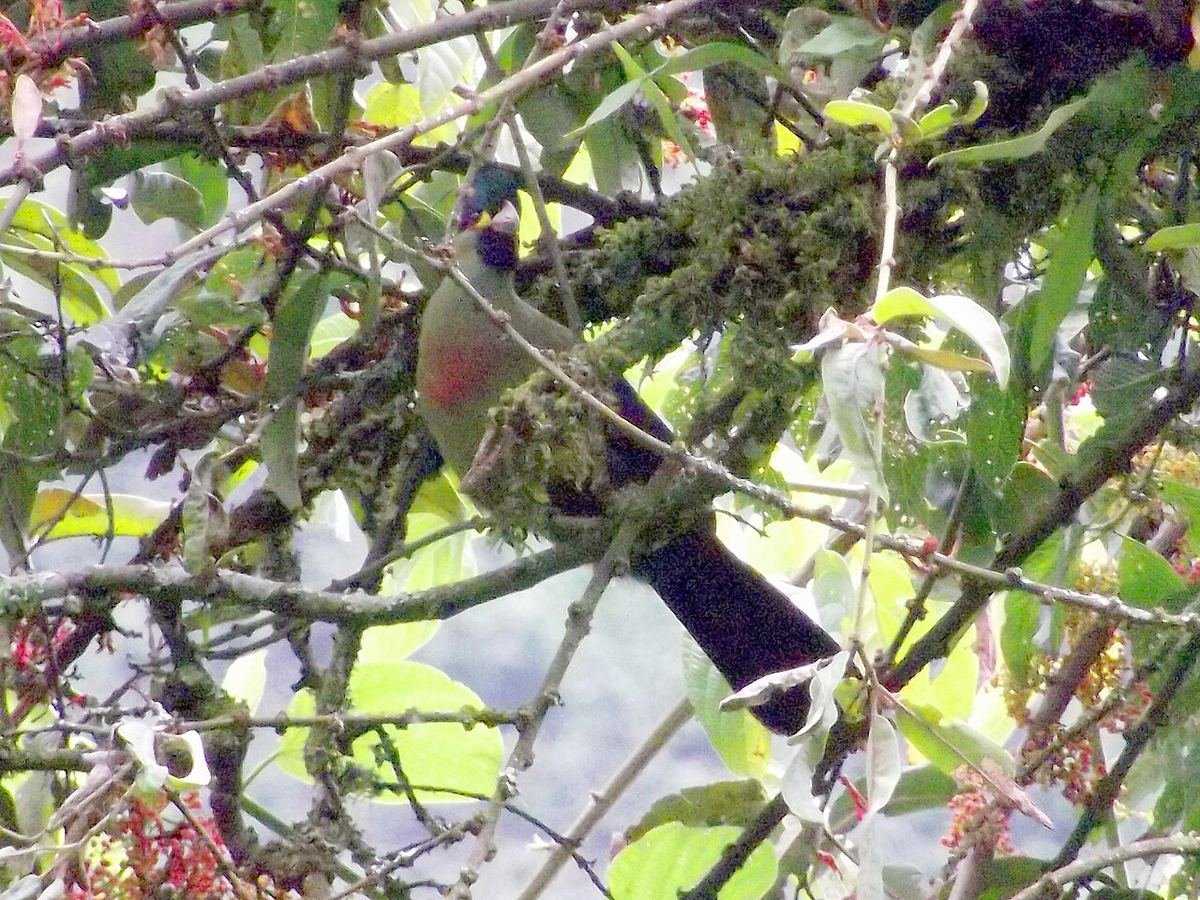
- Rwenzori turaco, a stunning green, red and violet turaco of the high forests
- Shelley’s crimsonwing, one of the hardest to find
- Handsome francolin, regal sunbird, Rwenzori batis and strange weaver
- Grauer’s swamp warbler, a bird of high-altitude swamps
Our top 10 birding spots
- 1. Bwindi Impenetrable National Park — over 350 species and the best place in Uganda for Albertine Rift endemics. The Ruhija sector and the Mubwindi Swamp trail are especially good.
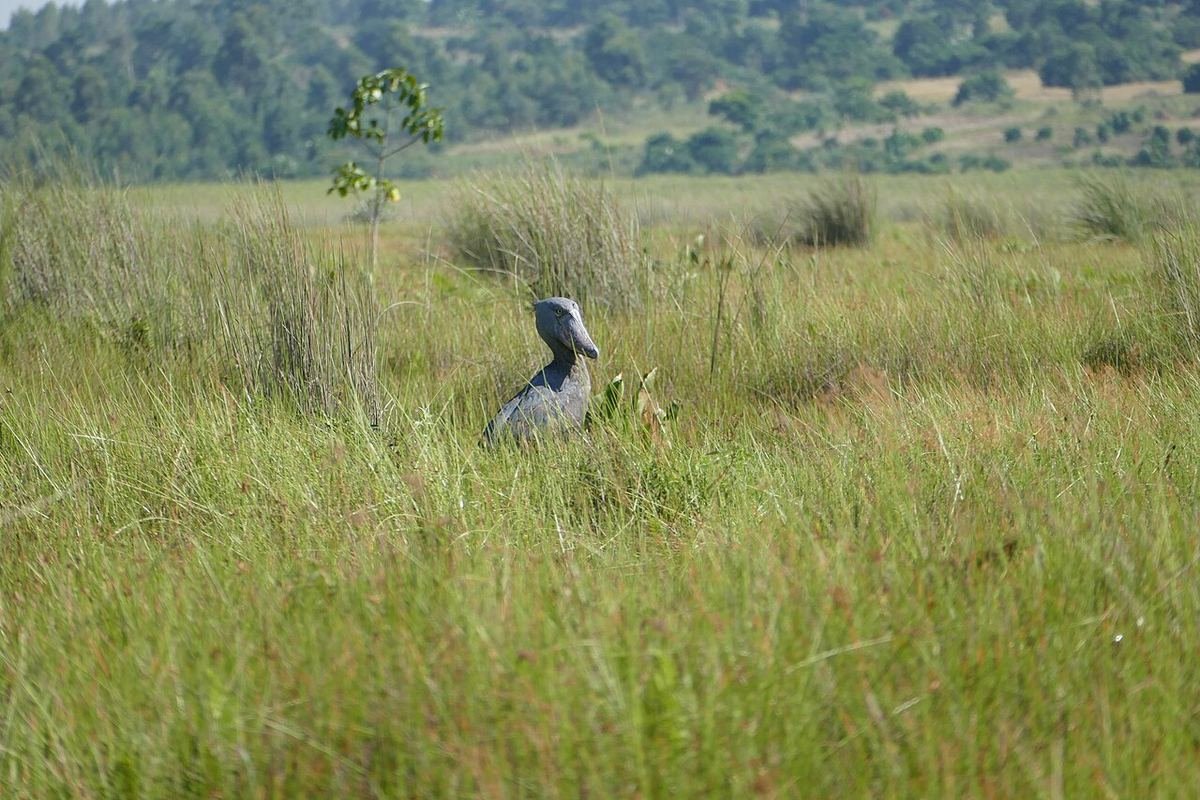
- 2. Mabamba Bay — the classic place to see the shoebill by canoe, close to Entebbe.
- 3. Queen Elizabeth National Park — over 600 species, the highest of any Ugandan park, with the Kazinga Channel a highlight.
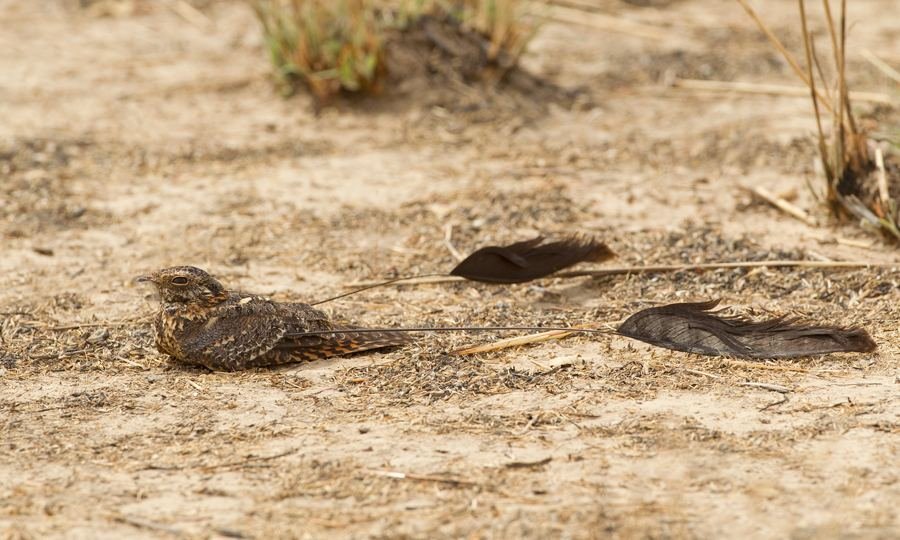
- 4. Murchison Falls National Park — around 556 species, the Nile delta, and the standard-winged nightjar.
- 5. Kibale National Park — around 370 species, including forest specials such as the green-breasted pitta, alongside the chimpanzees.
- 6. Bigodi Wetland Sanctuary — a community-run swamp walk, famous for the great blue turaco. See our Bigodi guide.
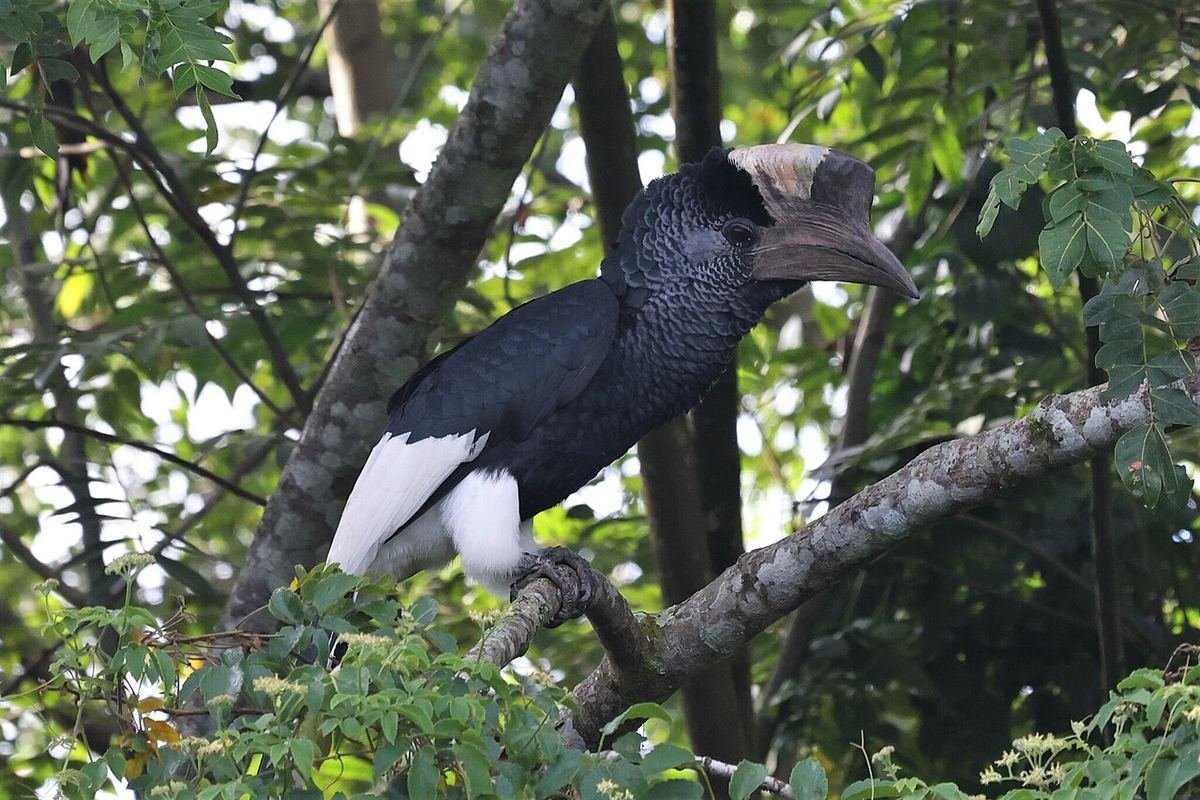
- 7. Semuliki National Park — over 440 species, many of them Central African birds found nowhere else in East Africa, including several hornbills.
- 8. Kidepo Valley National Park — over 470 species, with ostrich, secretary bird and many dry-country birds found in no other Ugandan park.
- 9. Lake Mburo National Park — about 330 species, with the elusive African finfoot on the lake and acacia birds on walking safaris.
- 10. Budongo Forest and Mabira Forest — lowland forests with superb birding. Budongo’s “Royal Mile” is a legendary forest track, and Mabira has more than 300 species within easy reach of Kampala.
For more Albertine Rift species, add Mgahinga, Echuya Forest and the Rwenzori Mountains to a longer itinerary.
When to go birding
Uganda is good for birds all year. Many birders like the wetter months, roughly March to May and September to November, when many resident species are breeding and in their finest plumage, and migrants from Europe and Asia are present from about October to April. The drier months make forest trails easier underfoot. In practice, the best time is the time you can travel. Tell us your dates and we’ll plan around them.
Practical tips
- Hire a specialist bird guide. Forest birds are hard to find without someone who knows the calls.
- Start early. The first hours after dawn are by far the most productive.
- Bring good binoculars and, for forests, a small torch and waterproof boots.
- Allow enough time. A focused birding trip usually needs two to three weeks to cover the country.
- Combine with primates. Bwindi, Kibale and Budongo also offer gorillas and chimpanzees.
Where birders like to stay
For birding, location matters more than luxury, because you’ll want to be on the trail at first light. A few bases we like:
- Bwindi, Ruhija: simple places such as Trekkers Tavern Cottages put you close to the best high-altitude birding and the Mubwindi Swamp trail.
- Kibale: Kibale Forest Camp and Primate Lodge Kibale are close to both the forest and Bigodi.
- Semuliki: Semliki Safari Lodge, in the neighbouring wildlife reserve, or Fort Portal.
- Murchison Falls: lodges along the Nile, such as Paraa Safari Lodge or Murchison River Lodge, for the river, the delta and dusk nightjar outings.
- Mabamba: stay in Entebbe the night before.
Browse more options on our accommodation page.
Plan it with us
Whether you’re chasing endemics or simply want to enjoy the birds on a classic safari, we’ll design a route that matches your pace, with experienced bird guides and lodges close to the best trails. Get in touch and tell us which birds are top of your list.