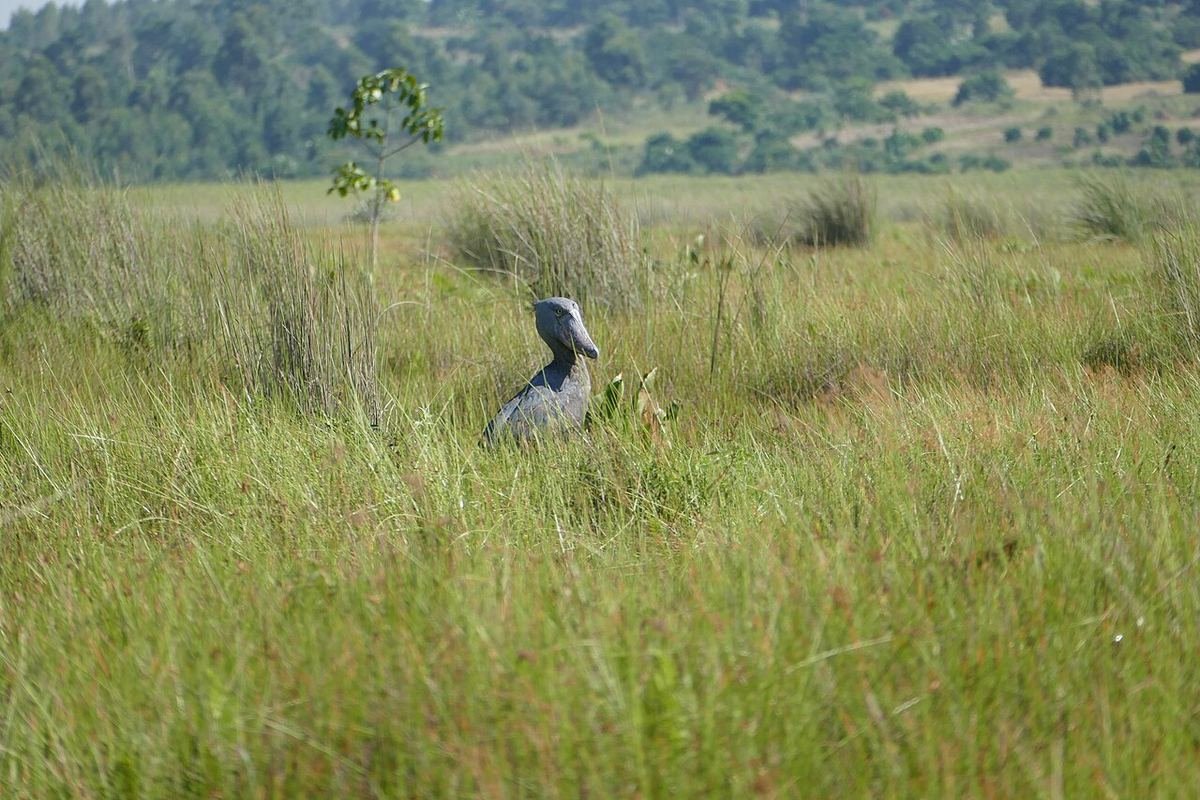
With its enormous bill, pale staring eyes and statue-like patience, the shoebill looks like something left over from the age of dinosaurs. It’s the bird many visitors most want to see in Uganda, and happily, Uganda is one of the best countries in the world to find it.
Meet the shoebill
- Size: a very tall bird, usually 110–140 cm, with a wingspan of well over two metres.
- The bill: huge, broad and shoe-shaped, with a sharp hook at the tip.
- Not really a stork: it’s often called the shoebill stork, but scientists now place it closer to pelicans and the hamerkop.
- Diet: mainly fish, especially lungfish and catfish, plus frogs and even young crocodiles.
- Status: listed as Vulnerable. Only a few thousand remain in the swamps of eastern and central Africa, threatened by habitat loss, disturbance and illegal capture.
Shoebills hunt by standing almost perfectly still, sometimes for a very long time, then lunging forward with the whole body. They are mostly silent, though they make a loud bill-clattering noise at the nest. Pairs usually raise just one chick.
Mabamba Bay: the classic shoebill trip
Mabamba Bay is a large papyrus wetland on Lake Victoria, west of Entebbe, and a Ramsar Site since 2006. It’s the easiest and most popular place to look for a shoebill, and it fits neatly into your first or last day in Uganda.
- Getting there: about 1–1.5 hours by road from Entebbe or Kampala. We usually leave very early.
- The canoe: local community guides paddle or motor you through narrow channels in the papyrus in a traditional wooden boat. The trip itself usually takes 2–3 hours.
- The search: guides stay in touch with local fishermen, who often know where a shoebill has been feeding. Sightings are frequent, sometimes at close range, but a wild bird is never guaranteed.
- Other birds: Mabamba has over 250 recorded species, including African jacanas, papyrus gonoleks and many herons and kingfishers.
Fees for the canoe and the community guides change from time to time, so we’ll confirm current costs when you book.
Other places to see shoebills in Uganda
- Murchison Falls delta: in Murchison Falls National Park, a boat trip downstream from Paraa to the papyrus delta where the Nile enters Lake Albert gives a good chance. UWA describes the shoebill as commonly spotted along the delta.
- Ziwa Rhino Sanctuary: the sanctuary offers a guided shoebill trek into its swamps, easy to add on the way to Murchison.
- Lake Mburo and Queen Elizabeth: both parks list the shoebill among their swamp birds, but sightings are occasional, so treat them as a bonus rather than a plan.
Practical tips
- Go early. Morning brings calmer water, softer light and more active birds.
- Dress for the boat. Hat, sun cream, a light rain jacket and shoes that can get wet.
- Protect your camera. A dry bag is worth having. A 300 mm lens is plenty.
- Sit still and speak quietly when a shoebill is found. Your guide will judge how close is too close.
- Wear a life jacket if one is offered, especially on open water.
When to go and where to stay
Shoebills live in Uganda all year, so there’s no bad month for the trip. Water levels in the swamp rise and fall with the rains, which can change which channels are used and how far the birds are from the boat, but your guides adapt to that. Rain showers are more likely in the wetter months, so bring a light waterproof whatever the season.
Because the best time is early morning, it makes sense to stay in Entebbe the night before. Options range from friendly guesthouses such as Boma Guest House to larger hotels like the Protea Hotel by Marriott Entebbe. Many travellers do Mabamba on the morning they arrive or before an evening flight home, since Entebbe International Airport is close by.
Good to know
The Mabamba trip is run by the local community, so your visit supports people who live alongside the swamp and have a reason to protect it. It combines well with a visit to the CTC Conservation Center near Mpigi, or with a gentle afternoon in Entebbe.
Plan it with us
Tell us your flight times and we’ll fit a Mabamba shoebill morning into your arrival or departure day, or build a longer route that adds the Murchison delta. Get in touch and we’ll handle the details.