On the northern edge of Queen Elizabeth National Park, not far from the shore of Lake Edward, lies a lake unlike any other in Uganda. Lake Katwe is so salty that almost nothing lives in it, and for centuries people have made a living by harvesting its salt by hand. A visit is a humbling, eye-opening break from game drives.
A crater lake full of salt
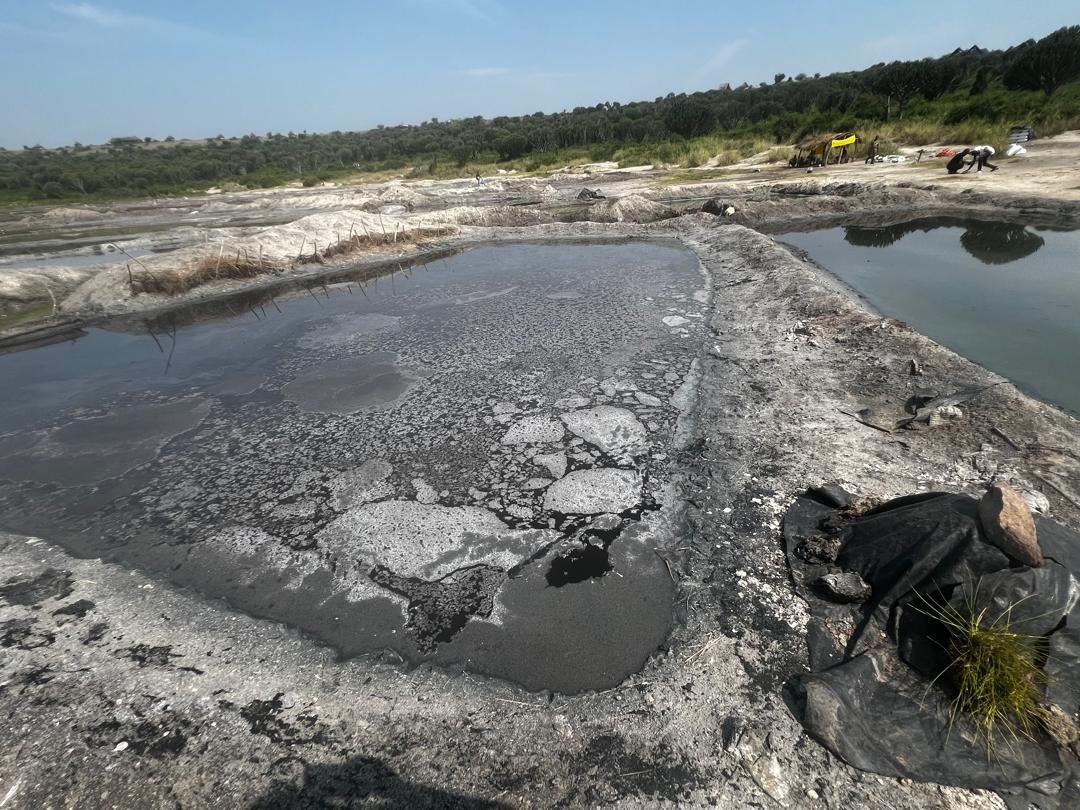
Lake Katwe fills a volcanic crater in the Katwe–Kikorongo volcanic field, part of the same landscape as the explosion craters you can see on the park’s crater drive. It is hypersaline: water draining into the crater carries dissolved minerals, and in the hot sun much of it evaporates, leaving the salts behind. The lake is shallow, and salt crystallises on its bed and around its edges.
A long history
Salt was precious in the African interior, and Katwe’s was traded far and wide across the region for centuries. Local accounts trace some of the salt pans back many generations, with families inheriting their pans rather than buying them. The town’s name is often linked to the gathering place where salt traders met.
In the 1970s a salt factory was built to industrialise production, but the plant did not last: the highly corrosive brine damaged its pipes and equipment, and it closed. Today the work is still done largely by hand, in much the same way it has been for generations.
How the salt is made
There are two main kinds of work:
- Salt pans. Around the shore are hundreds of small, walled pans. Lake water and brine are let in and left to evaporate in the sun. As crystals form, workers rake and scoop the salt, sort it and carry it out in sacks. Both men and women work the pans.
- Rock salt. Further out in the lake, mostly men stand in the water to break up and lever out slabs of hard salt from the lake bed, then float them to shore. This is some of the toughest work you will ever see.
Different grades are sold for different uses, from cooking salt to coarse salt for livestock and for tanning hides. The work is hot and hard on the body: the brine irritates skin, and the sun reflects off the white crust. It’s worth keeping that in mind when you visit.
The community tour
Visits are organised by the community at Katwe, through the local tourism information centre, where you pay a small fee and meet a guide. The walk usually takes one to two hours and includes:
- An introduction to the lake’s geology and history.
- A walk between the salt pans, watching the harvest.
- An explanation of the rock-salt mining and the different grades of salt.
- A look at the stores and the trade that keeps the town going.
Fees go to the community, and we’ll confirm the current price when we book.
Nearby: craters and flamingos
Katwe sits beside the park’s explosion craters, and the crater drive between the Kabatoro gate area and the Queen’s Pavilion is one of the most scenic roads in Uganda. The small crater lake of Munyanyange, right next to Katwe, sometimes hosts lesser flamingos, and it’s a lovely spot for birders.
Visiting respectfully
- Always ask before photographing workers, and accept a “no”.
- Wear closed shoes you don’t mind getting salty; the ground is sharp and wet in places.
- Bring a hat, sunscreen and water. It is hot and there is little shade.
- Buying a small bag of salt or a local craft is a nice way to support families.
- The dry seasons are the busiest time for salt harvesting, as rain slows evaporation.
- Ask your guide about the different grades of salt and where they are sold; the trade still reaches neighbouring countries.
- There’s no accommodation at Katwe itself for most visitors, so it’s best visited from the Mweya area or from Kasese.
Lake Katwe shows you a side of Uganda that most safaris miss: people working with a remarkable landscape, as their families have for generations. It fits into half a day from Mweya, alongside the crater drive and the Kazinga Channel cruise. Browse our cultural experiences, then ask us to add Katwe to your trip.
Found this useful? Send it to someone planning a trip.