Jinja has been famous for white-water rafting for decades, and it’s still one of the world’s great big-volume rivers to raft. But the river has changed. Two hydropower dams have flooded some famous rapids, and many articles online are out of date. Here’s what rafting on the Nile looks like now.
What the dams changed
- Bujagali dam (2012): its reservoir flooded Bujagali Falls and the rapids just below Jinja. Rafting trips moved further downstream.
- Isimba dam (2019): a 183 MW station in Kayunga District, about 40 km downstream of Bujagali. Its reservoir flooded the lower part of the old day trip, including well-known rapids such as Nile Special, Hair of the Dog and Kulu Shaker.
What survives is the stretch between the two, around Kalagala and Itanda. Operators have rebuilt their trips around it, and the good news is that it still includes genuine grade 5 white water.
What the grade 5 day looks like now
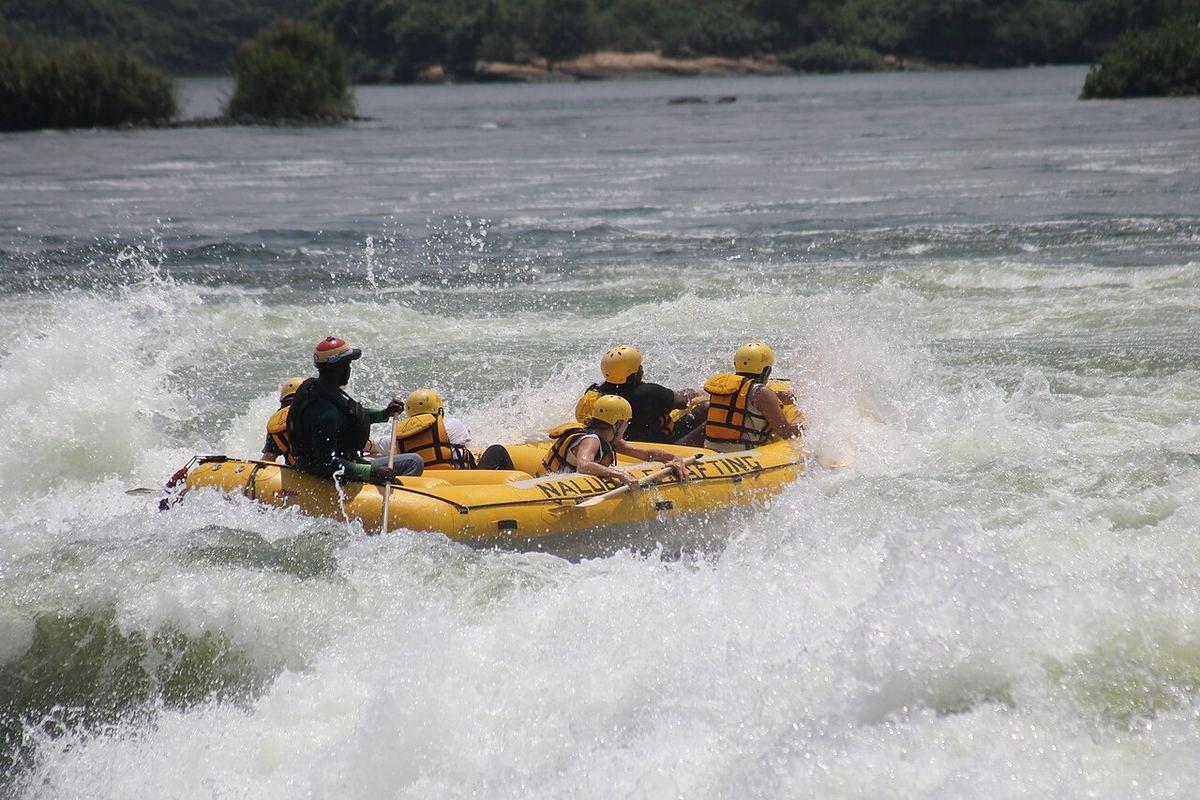
Trips start early from Jinja, or with a pick-up from Kampala, and include a safety briefing and practice on flat water before the first rapid. The rapids you’ll hear about include Overtime, a grade 5 drop, and grade 4 rapids such as Retrospect and Bubugo. The route also passes the thundering Kalagala and Itanda falls, which the rafts look at rather than run. The exact line-up depends on the operator and the water level on the day.
Expect about four to five hours on the water, with snacks mid-river and a meal at the end. Grade 5 means big, powerful rapids where flips are part of the fun. Guides choose lines to suit the group, and some rapids can be walked around.
Who runs the trips
Several established companies operate on the Nile, including Nile River Explorers, Adrift and Nalubale Rafting. Each runs its own variation, from full grade 5 days to gentler grade 3 trips. We book with operators that use qualified guides, safety kayakers and good equipment.
Safety
- Age: grade 5 trips are generally for ages 16 and over.
- Kit: helmets and life jackets are provided and must be worn.
- Safety kayakers: they paddle alongside the rafts to pick up swimmers after a flip.
- Swimming: you should be comfortable in water, though you don’t need to be a strong swimmer.
- Listen to the briefing: it teaches you exactly what to do if you fall out.
- Health: ask your doctor about any health precautions for river activities in East Africa.
Family floats and gentler options
You don’t need to love big rapids to enjoy the Nile. Nile River Explorers runs a Family Float of about 7 km, starting below the Owen Falls dam in Jinja, on flat, slow-moving water past islands, with chances to swim and spot otters, monkeys and monitor lizards. The minimum age is 4, and the operator lists it at US$30 for adults and US$20 for children. Grade 3 trips are a good middle ground for teenagers and nervous first-timers.
Where to stay
- Nile River Explorers Campsite (budget): a lively riverside camp and rafting hub.
- Gately on Nile (mid-range): a boutique guesthouse in a colonial-era house in Jinja.
- Wildwaters Lodge (luxury): on a private island in the rapids, a short hop from the rafting stretch.
Practical tips
- Wear quick-drying clothes, strap-on sandals or old trainers, and high-factor sunscreen.
- Leave valuables at your lodge. Most operators offer photos or video of your day.
- Book ahead in busy holiday periods, and ask us to confirm the current rates.
- Rafting is all year: the river runs well in every season.
Make a weekend of it
Add the Source of the Nile, a stop at Mabira Forest on the way from Kampala, or continue east to Sipi Falls. See our water adventures, then tell us who’s coming and how adventurous you feel, and we’ll book the right trip on the Nile.