
National Park · Southwestern Uganda
Bwindi Impenetrable National Park
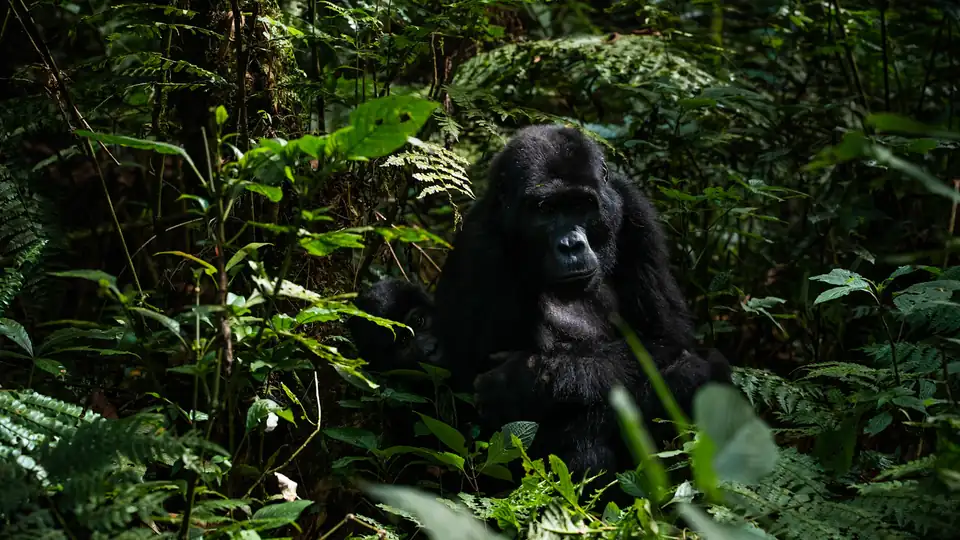
One of the last strongholds of the mountain gorilla — Uganda is home to roughly half of the world's remaining population, most of them here.

How to get there
By road from Kampala via Mbarara/Kabale (southern approach) or via Fort Portal (northern approach), or by scheduled light aircraft to Kihihi or Kisoro airstrip.
What to find
Gorilla trekking permits across four trailhead sectors (Buhoma, Ruhija, Rushaga, Nkuringo), plus forest birding and Batwa cultural walks.
Overview
Bwindi Impenetrable National Park covers about 331 km² of steep, mist-covered rainforest on the edge of the Albertine Rift. Some of its forest is thought to be over 25,000 years old, and it was inscribed as a UNESCO World Heritage Site in 1994 for its extraordinary biodiversity.
It's best known as home to nearly half of the world's mountain gorillas, with more than 20 habituated families spread across four trekking sectors. The forest also shelters around 350 bird species, including many Albertine Rift endemics, plus chimpanzees, L'Hoest's monkeys, forest elephants and hundreds of butterfly species.
Highlights
- An hour with a habituated mountain gorilla family, in groups of no more than eight visitors
- The Gorilla Habituation Experience in Rushaga: up to four hours with a family, only four visitors
- World-class forest birding, especially around Ruhija and the Mubwindi Swamp trail
- The Batwa Experience, led by the forest's original inhabitants
- Waterfall and river trails from Buhoma, and community walks in the surrounding villages
Things to do
Gorilla trekking
Permits are US$800 for foreign non-residents (US$600 in April, May and November). The minimum age is 15.
Gorilla habituation
Rushaga sector only. US$1,500 in 2026, rising to US$1,800 from January 2027.
Birding
Guided birding walks target specials like the African green broadbill and Grauer's broadbill.
Nature and community walks
Munyaga River trail, the Buhoma waterfall trail, and village walks with local guides.
Batwa cultural experience
Learn how the Batwa lived in the forest before the park was created.
Best time to visit
Trekking runs all year. The drier months of June to August and December to February give firmer trails and are the busiest, so book permits early. April, May and November are wetter, but permits are discounted and easier to get.
Getting there
From Kampala it's a full day's drive (8 to 10 hours) to the southern or northern sectors. Many travellers break the trip at Lake Mburo or Queen Elizabeth. Scheduled flights from Entebbe land at Kihihi (for Buhoma and Ruhija) or Kisoro (for Rushaga and Nkuringo). From Kigali, the southern sectors are about 4 to 5 hours by road.
Where to stay
Each sector has its own lodges, ranging from simple community-run bandas to luxury forest lodges. Because your permit is tied to a sector, we always book your lodge in the same sector so you aren't driving for hours before dawn.
Bwindi: Buhoma (northern sector)
Bwindi: Rushaga, Nkuringo & Ruhija
A selection of well-known options, not a complete list. See all accommodation in Uganda →
Good to know
- Hire a porter: it makes the trek easier and supports local families.
- Pack waterproof boots, a rain jacket, long sleeves and garden gloves.
- Carry your passport; rangers check it against your permit.
- You can't trek if you have a cold or flu, because gorillas catch human illnesses.
Permit prices, park rules and access can change. We always confirm the latest details when we plan your trip.
Related guides